
The Founders of a Creative Colony: Agnes Pelton and Her Desert Circle
When Agnes Pelton arrived in Cathedral City, its population was only around 100. Though it would grow slowly over time, the smallness of the community offered something rare, a shared eagerness to connect.
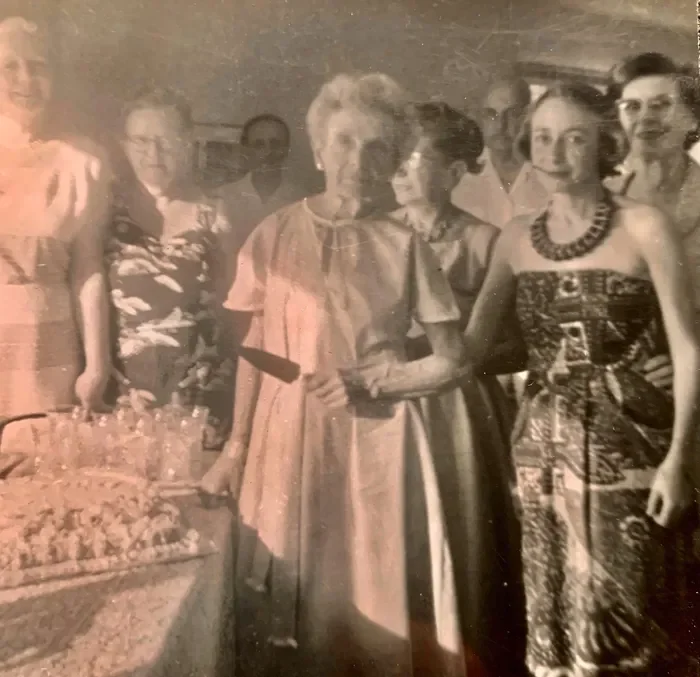
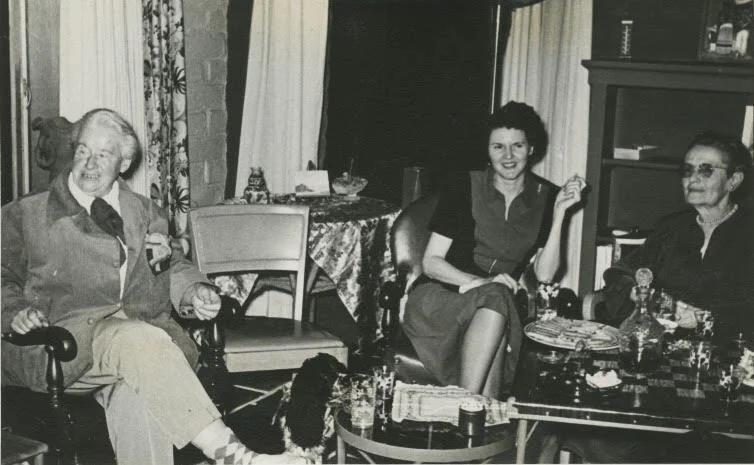
The last known photo taken of Agnes Pelton surrounded by her desert circle of friends as they celebrated her birthday.
Artists and neighbours alike sought one another out across the desert, forming a close-knit and supportive creative circle. There was a genuine camaraderie among these artists, a sense of mutual encouragement and quiet dedication. To the untrained eye, it might seem unlikely that such a silent and harsh landscape could nurture a thriving artistic community, yet it did so with remarkable success.
In this spirit of connection, this post seeks to spotlight the founders, friends, and supporters who were part of Agnes Pelton’s circle. Through them, we come to better know her community and to understand how the desert, in its time, became a kind of magical haven for artists, a place where creativity gathered and notable figures passed through its quiet expanse, its doors, or perhaps more fittingly, its open-air cathedrals.
Agnes Pelton arrived in Palm Springs, guided in part by her correspondence with her friend Bettye K. Cree (Elizabeth Kirkpatrick Cree), a prominent advocate for the desert arts community.
Bettye K. Cree (1879—1944), was an early supporter of the arts in Palm Springs and a key figure in shaping the desert’s creative community. She was married to Raymond Cree, a prominent civic leader, developer, and the first superintendent of schools for Riverside County. His work contributed to the area’s early growth and land development, but the couple later divorced, and Bettye’s own path became increasingly defined by her commitment to the arts.
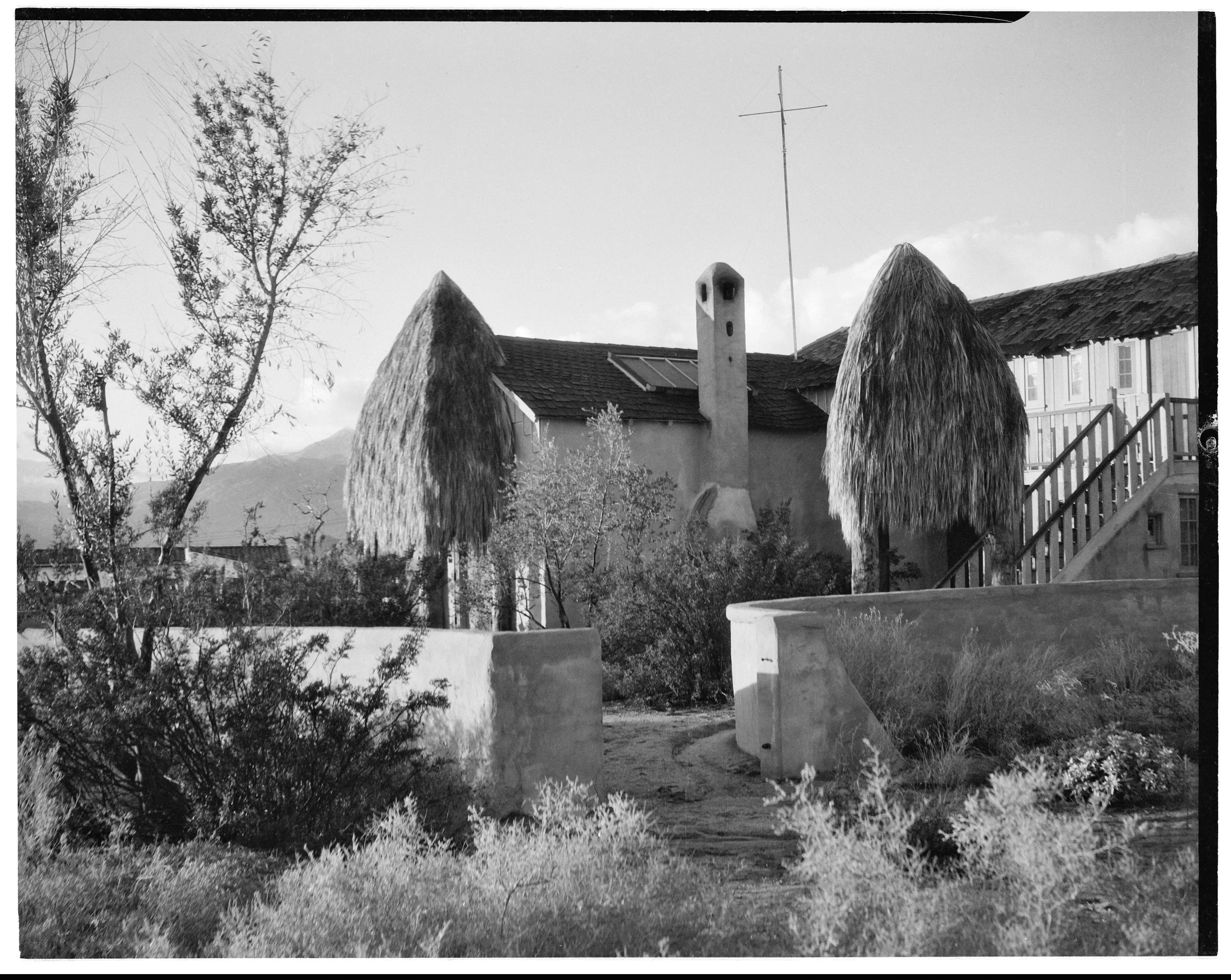
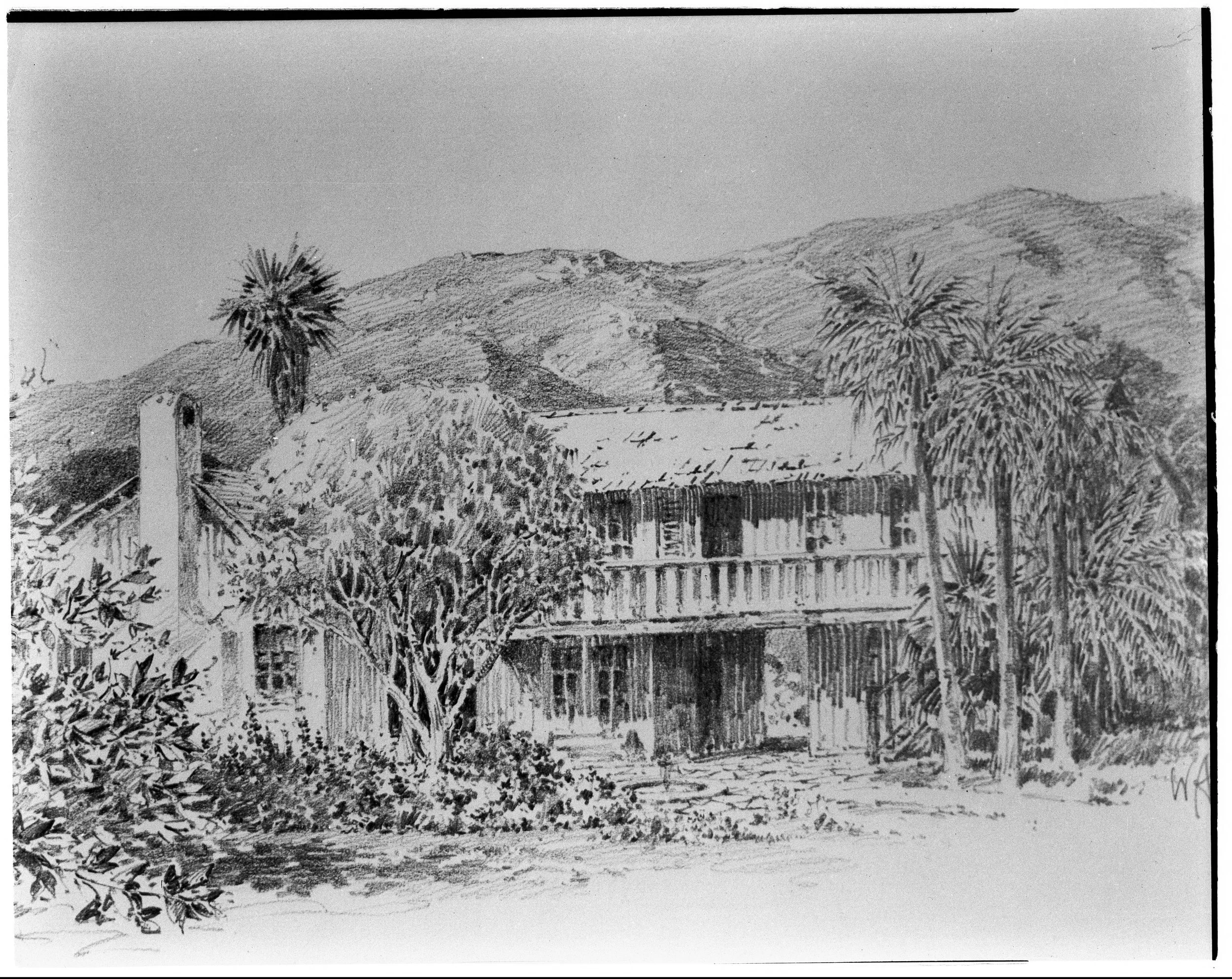
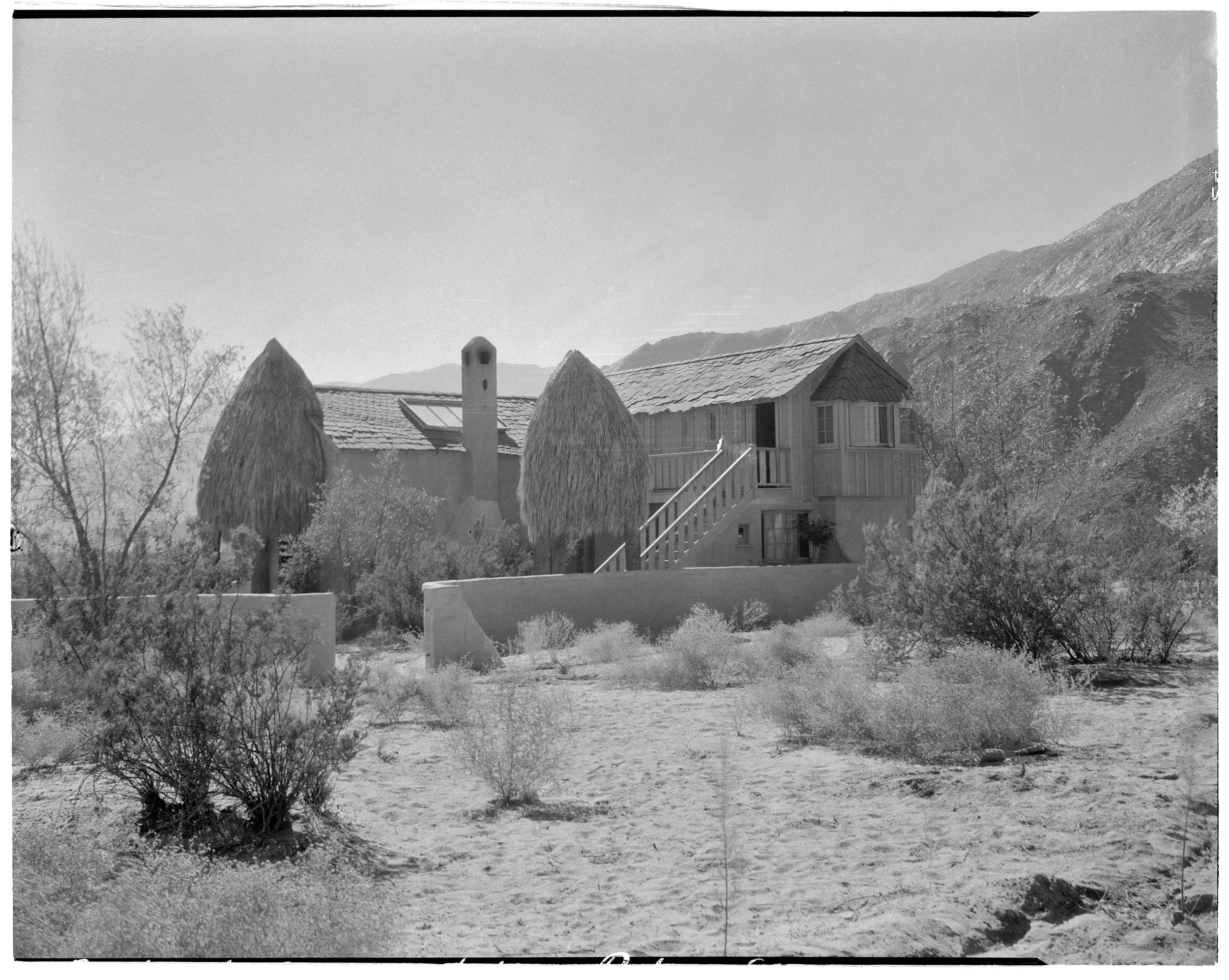
Bettye founded the Desert Inn Art Gallery, a two-story space in Palm Springs that became an important platform for artists working in the region. She exhibited Agnes Pelton’s work there, helped connect her with buyers, and encouraged her to settle in the desert landscape she loved.
While much of Bettye Cree’s story has been lost over time, her influence is clear. She played a meaningful role in establishing the early arts scene in the Coachella Valley, creating opportunities for artists and supporting their work. She passed away in Pasadena on March 16, 1944.
A close friend and neighbor of Agnes Pelton, Matille “Billie” Prigge Seaman (1883–1966) was a landscape painter, art teacher, and one of the earliest residents of Cathedral City, California. Billie, as she liked to be called, was a prominent member of the “bohemian sisterhood” that shaped the local artist colony in the early 20th century.
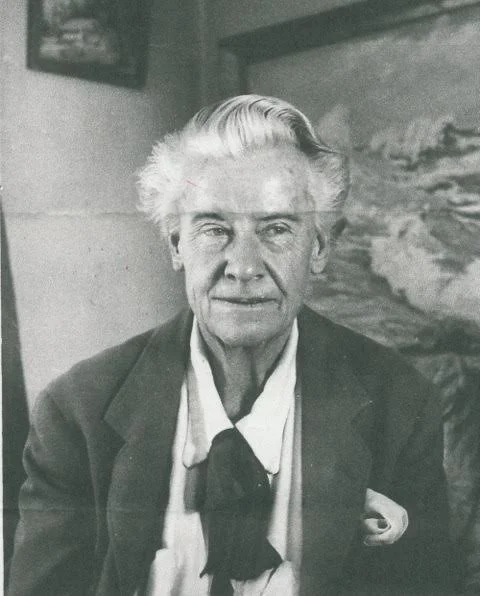
Matille “Billie” Prigge Seaman (1883–1966)
landscape painter, art teacher, and early Cathedral City resident who helped shape the desert artist community with Agnes Pelton.
Billie settled in Cathedral City in 1928, just a few years before Pelton arrived, and lived in the “Cove” area alongside a small circle of artists and intellectuals. She often painted en plein air with peers like Catherine Ellis, capturing the rugged beauty of the Coachella Valley, from smoke tree–lined washes to quiet desert vistas. Her work, grounded in traditional landscape and Impressionist techniques, offered a direct, representational counterpoint to Pelton’s more mystical abstractions. Billie also supported Pelton’s career: she was once the owner of Pelton’s significant work Flowering (1929), and a 1935 portrait of Billie may have been painted by Pelton herself. Known for her unconventional style, Billie famously declared, “I simply don’t own a dress nor even a hat,” embracing a masculine, butch appearance that reflected the open-minded, bohemian culture of the desert colony.
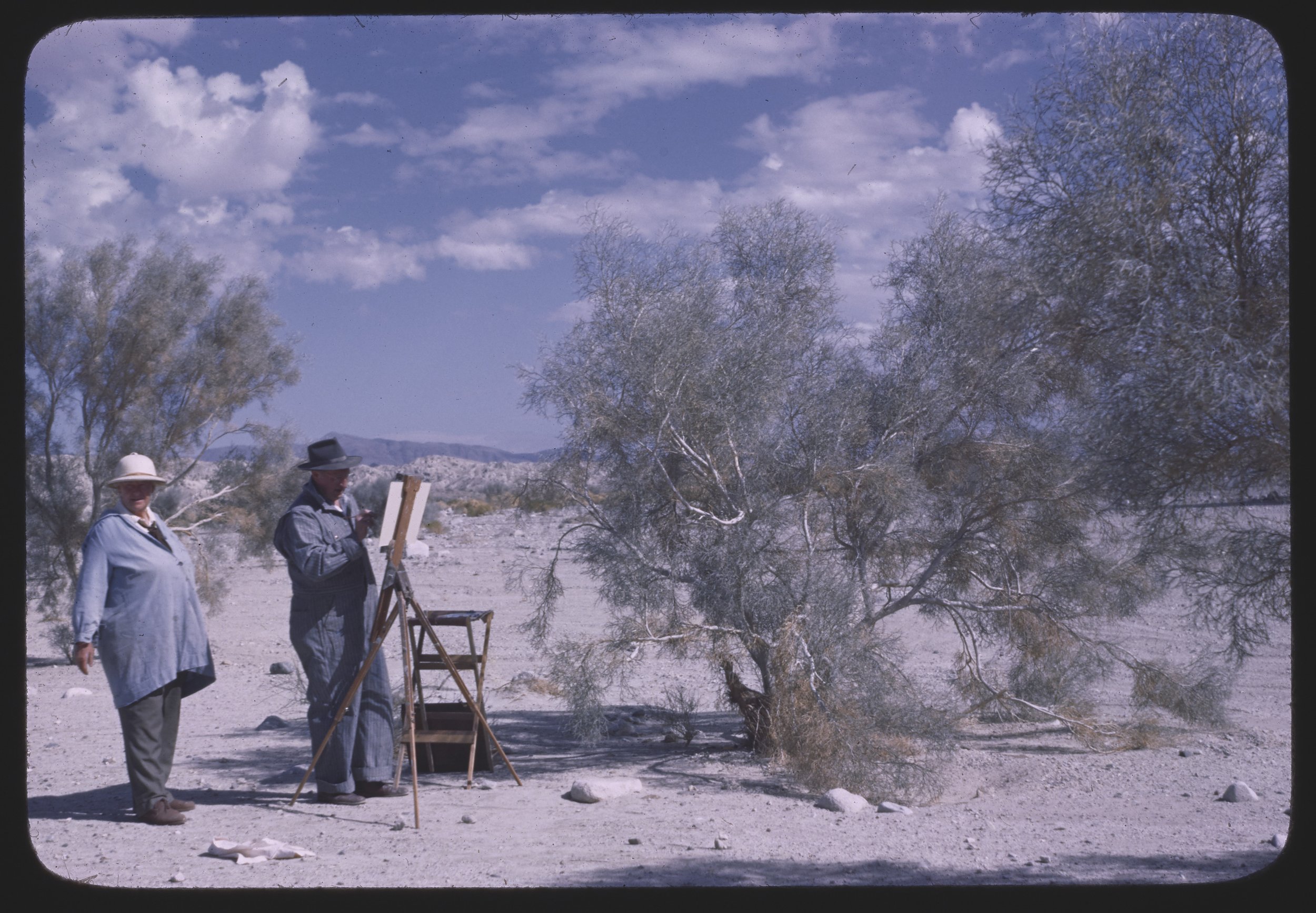
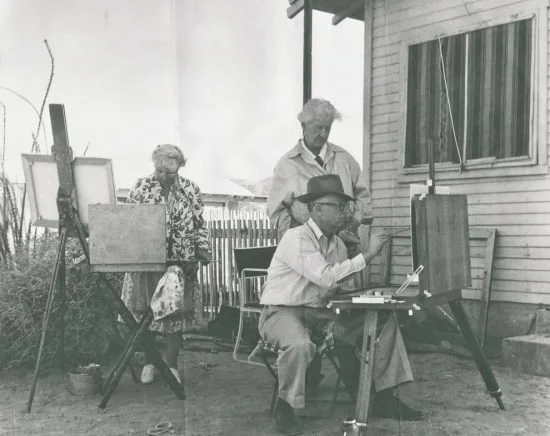
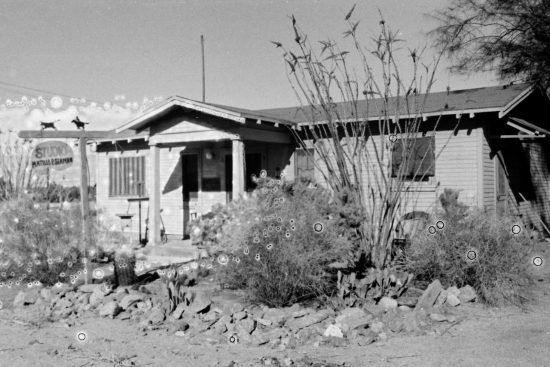
An accomplished horsewoman from her native White Plains, New York, she brought her equestrian skills to the desert, and her self-built home and studio at 37-086 Cathedral Canyon Drive still stand today. Billie carried a Remington .41 Derringer etched with her late husband Jim Seaman’s name—a practical tool she treated as naturally as most carry a pair of car keys.
As a teacher, Billie was equally innovative. She led students into the desert for outdoor painting classes, ferrying them and supplies in her vintage car, fondly called her “Open Air Taxi.” Through her instruction and her own paintings, she fostered a sense of community and creativity. Billie would give Agnes rides into town and on creative excursions.
For such a small community, Cathedral City held an unusual concentration of creative lives—an almost alchemical mix of personality, independence, and artistic exchange.
Among Agnes Pelton’s most compelling neighbors was Christina Lillian, a figure whose presence has since taken on the quality of local lore. A statuesque blonde with the air of a Golden Age film star, Christina moved easily between worlds, counting Greta Garbo and D.H. Lawrence among her circle, before establishing her own desert enclave. Like Taos patron Mabel Dodge Luhan, she became a charismatic force, using her resources to support artists and foster community. In Cathedral City, she presided over an informal artists’ colony known as Sven-Ska, where creativity, conversation, and shared living shaped daily life.
In a letter written in Cathedral City in 1936, Agnes Pelton mentioned her neighbor Christina—a successful dress designer who had retired by the age of 35.
Born in 1888 in the small Swedish settlement of Lindsborg, Kansas, Christina’s early life was modest and industrious. After her father’s death, she left for Hollywood, where she built a successful career designing gowns for film, including for Greta Garbo. Reinventing herself along the way, she became “Christina,” leaving her earlier identity behind.
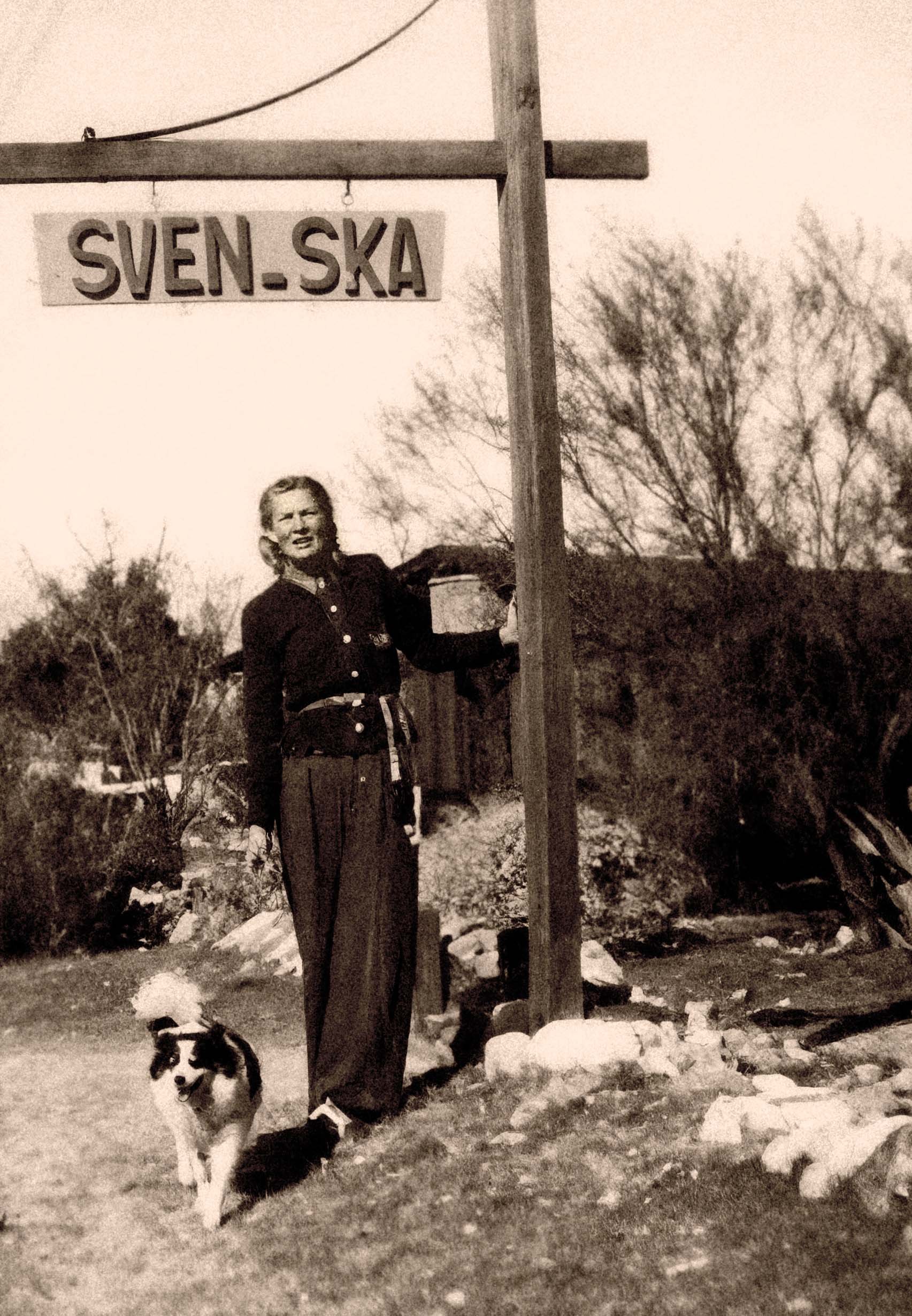
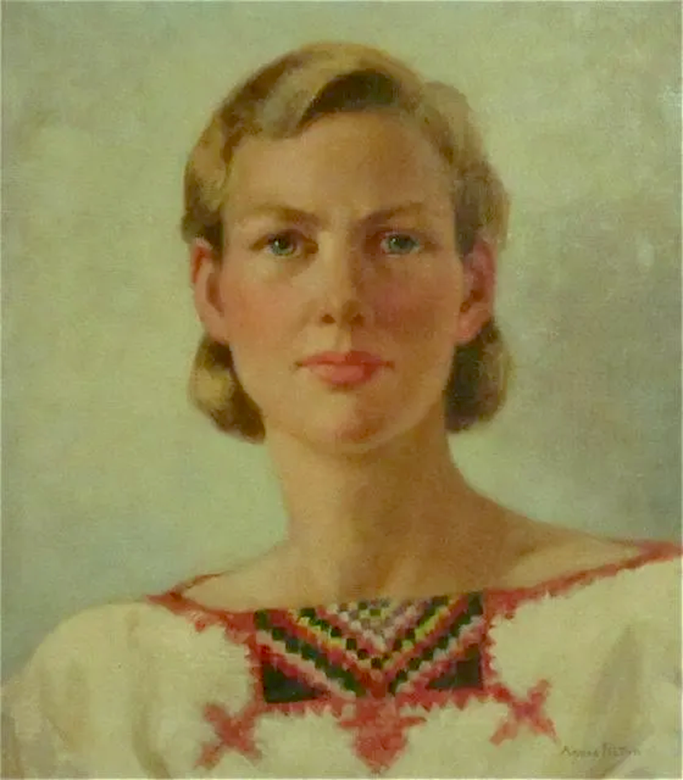
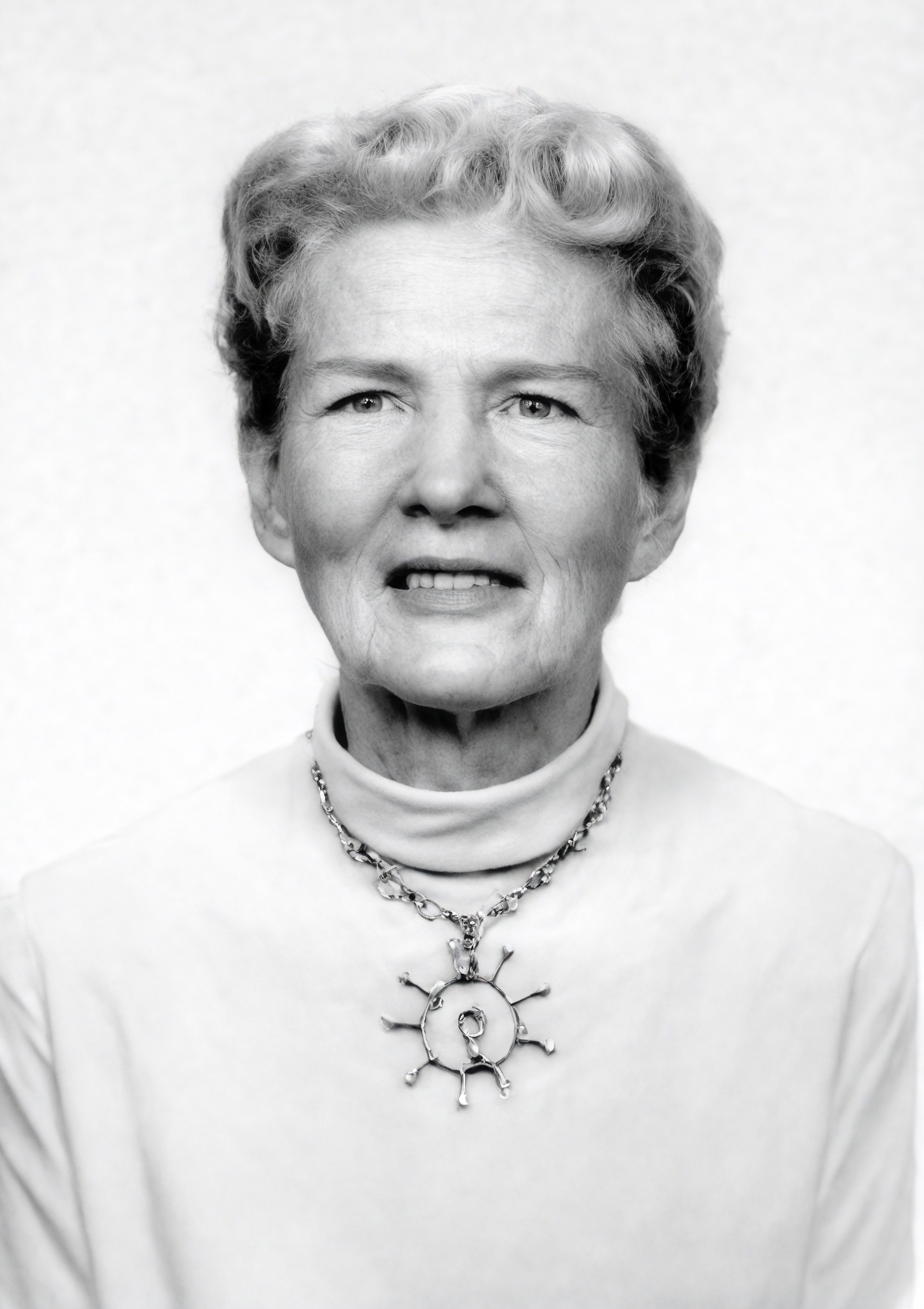
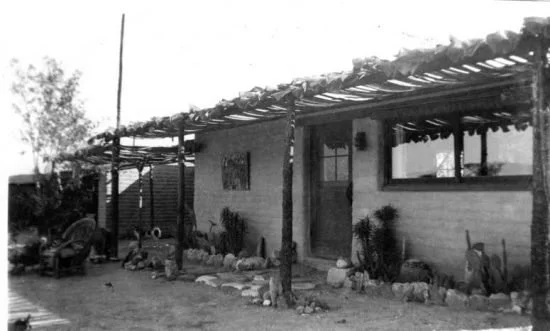
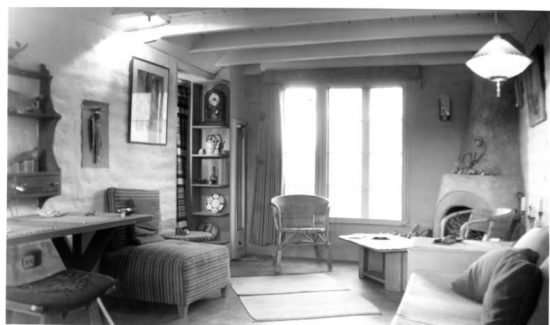
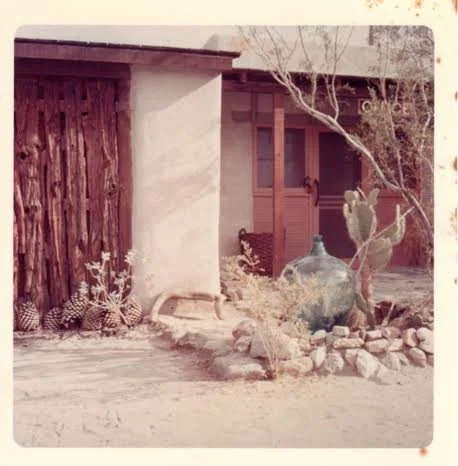
Her ambitions extended beyond fashion. Drawn to art and spiritual inquiry, she envisioned what she called "a new world plan"—a life shaped by communal living, nature, metaphysics, and creative practice. Though she made her own works, including assemblages she called Taos Tintypes, her greatest impact came through supporting others. Her artistic direction deepened in the 1930s after studying with Hans Hoffman. Reflecting on that experience, she wrote:
"It was the last day of class. Hans Hoffman was sitting out in the sun. I went out to tell him goodbye. I said — You have given me enough to last my lifetime."
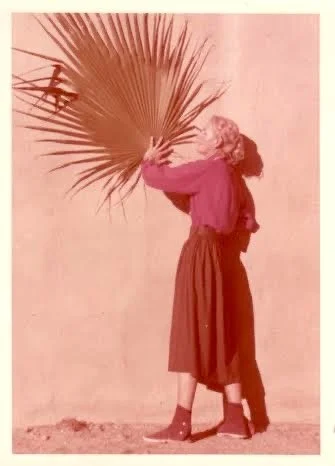
Emma Christina Lillian
(1888-1976)
Dress designer, artist, and arts patron who founded the Sven-Ska artists’ colony and helped shape Cathedral City’s creative community alongside Agnes Pelton.
By the time she settled in Cathedral City along Grove Street, Christina was at the center of a small but vibrant network that included Agnes Pelton, “Billie” Prigge Seaman, and other artists connected to the Transcendental Painting Group.
Together, they helped shape a distinctly local version of an artists’ colony, less formal than Taos, but no less driven by shared ideals. Christina’s home became a gathering place for visiting artists, writers, and thinkers, while she and her circle contributed to the early cultural foundations of the region, including the Palm Springs Desert Museum and the Desert Art Center. Exhibitions were often held in Pelton’s home, making it one of Cathedral City’s first art spaces.
Christina Lillian played a central role in shaping the creative fabric that surrounded Agnes Pelton, helping transform a quiet desert town into a place of exchange, experimentation, and lasting artistic presence.
A pivotal moment in this story is often seen in the founding of the Desert Art Center, which itself emerged gradually through informal gatherings, pop-up exhibitions, and open studio tours.
This group of motivated, like-minded, and open-hearted artists shared a desire for purpose and contribution. They sought to create something lasting, an opportunity to support local and visiting artists alike, to share the desert’s spiritual and creative richness, and to help sustain it over time. Their legacy would extend beyond their individual works and careers, living on in the community they helped shape and in the generations of artists who would follow in their footsteps.
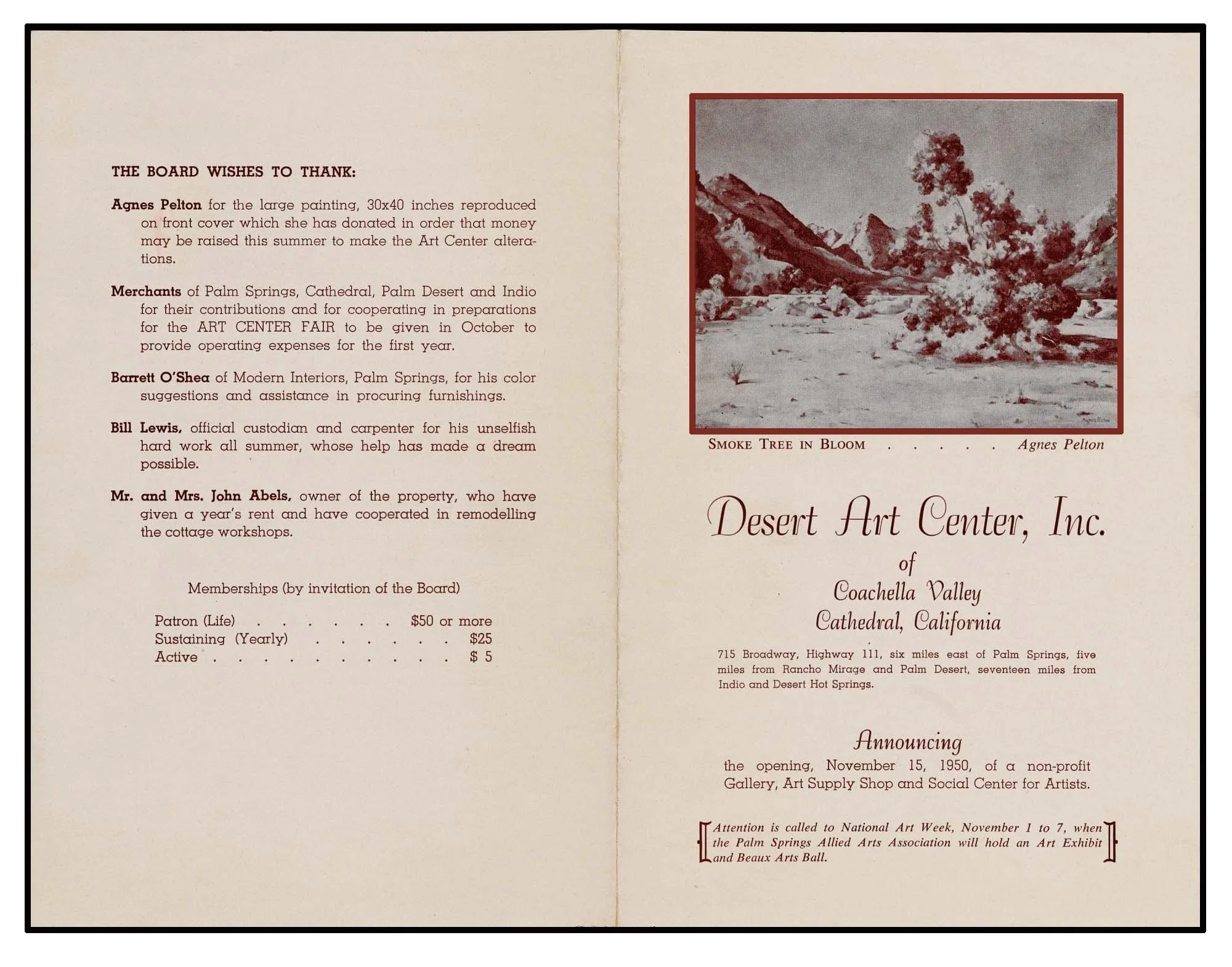
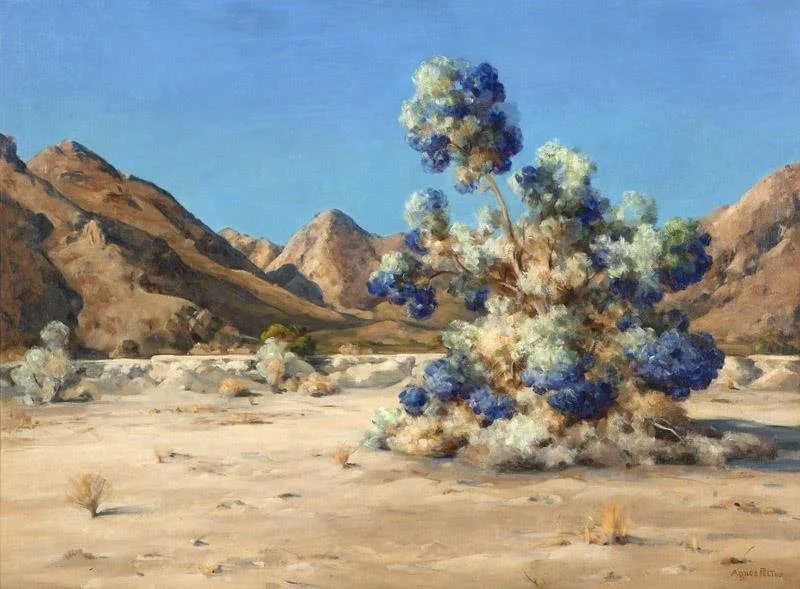
The Desert Art Center was formally established in 1950, shaped by a growing need to support artists and give structure to the desert’s expanding creative community. Before its founding, Agnes Pelton’s home studio had already begun to fill this role, hosting small exhibitions and informal gatherings that brought artists together.
In April of that year, founding Chairman Mary Wolseth addressed the gap between reputation and action:
“we talk of this desert area being a paradise for artists, but what have we done to encourage them to come here?”