
Why MoMA’s Acquisition of The Fountains is a Victory for the Soul
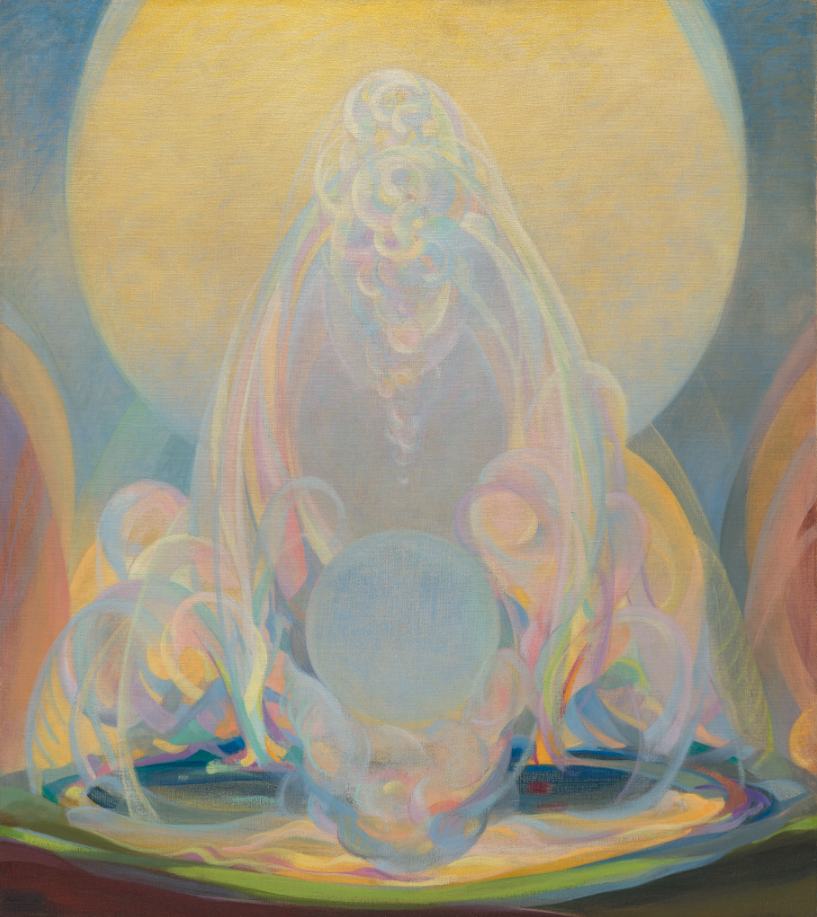
Agnes Pelton. The Fountains. 1926. Oil on canvas, 36 1/8 × 32" (91.8 × 81.3 cm). The Museum of Modern Art, New York. Gift of Joan H. Tisch (by exchange)
Behind the record-breaking $3.4 million sale lies a map of the metaphysical—and a long-overdue crowning of Agnes Pelton’s quiet brilliance.
There are moments in the art world that feel less like a transaction and more like a correction of history.
In May 2023, under the rhythmic gavel of a Christie’s auction, Agnes Pelton’s 1926 masterpiece, The Fountains, surged past its estimates to settle at a staggering $3.4 million. But the true value wasn't captured in the currency; it was realized when the Museum of Modern Art (MoMA) stepped in to bring the work home. By using a "gift by exchange" repurposing funds to secure this specific vision, MoMA didn't just buy a painting; they made a definitive vow to protect Pelton’s legacy.
It is a work born from Pelton’s disciplined solitude in a Long Island windmill, where she moved beyond the noise of the world to listen to the "Universal Divine." While her contemporary Georgia O’Keeffe was magnifying the physical Earth, Pelton was painting the air between thoughts.
The canvas is a study in spiritual elasticity. Pelton believed that water and the human spirit attained its highest form when it became a selfless vessel, reflecting the shimmering, pastel "emanation of pure thought." It is a quiet, stoic triumph; she did not seek the spotlight in her lifetime, yet through sheer devotion to her craft and her mystical convictions, her work now commands the center of the canon.
A technical marvel of layered glazes and a high-stakes gamble on the invisible. Within its luminous sprays lie hidden geometries of the subconscious that we are only just beginning to decode.
The Museum of Modern Art has created a beautifully blog post that explores Agnes Pelton’s working notes in depth, revealing the care, intention, and devotion she brought to her practice, from her use of numerology to her refined techniques. See it here >